
What a Child With a Cold Usually Needs Most From You
Most Colds Pass on Their Own, but Parents Still Have Work to Do

Free gift for you! A practical companion resource is waiting for you near the end of this article to help you remember, apply, and benefit from what you read.
Don’t forget to download!
Colds are usually mild viral illnesses that pass on their own, but children still need fluids, comfort, close watching, and timely medical review when warning signs begin to appear.
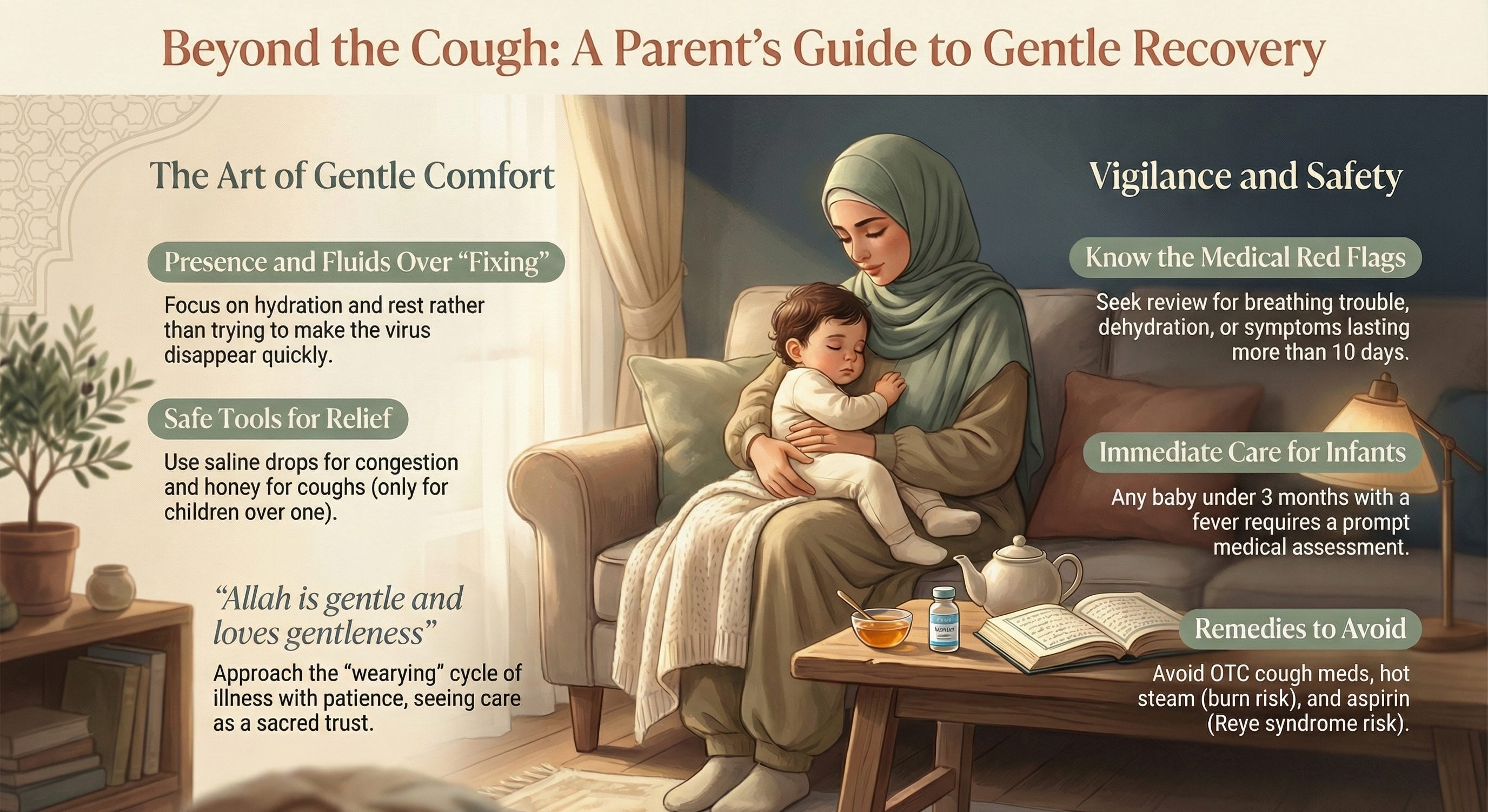
It can start to feel endless.
One child gets better, then catches something else. A few calmer days pass, and then there is another runny nose, another cough in the night, another morning where your child wakes up tired and clingy and not quite themselves. After a while, especially in the early years, colds can begin to feel like part of the furniture of family life.
And still, every time, a parent has to look again.
Is this just another cold?
Or is this the one that needs more?
When childhood colds start feeling constant
Young children can have many colds each year, especially in the colder months when people spend more time indoors and closer together. That is not usually a sign that something is deeply wrong. It is often part of childhood itself, because their immune systems are still meeting a long list of viruses for the first time. Colds are upper respiratory viral illnesses, and more than 200 viruses can cause them. They spread through coughing, sneezing, close contact, and contaminated hands or surfaces. [1] [2]
There is something wearying about that for parents.
Not frightening, usually. Just wearing.
And that matters too.
It is usually mild, but it still asks something from you
The usual cold pattern is familiar: a runny or blocked nose, sneezing, sore throat, cough, and sometimes headache, mild fever, tiredness, poor appetite, or irritability. Flu can overlap with cold symptoms, but influenza usually hits harder, with more fever, more body aches, and a child who looks much more unwell overall. [1] [2]
Most colds get better by themselves.
That part is important to remember.
There is no medicine that makes a cold disappear quickly, and antibiotics do not help because colds are caused by viruses, not bacteria. [1] [2]
So the work of parenting here is often quieter than people expect. It is not heroic treatment. It is comfort. Fluids. Rest. Watching.
Allah’s mercy appears in these ordinary sick days too
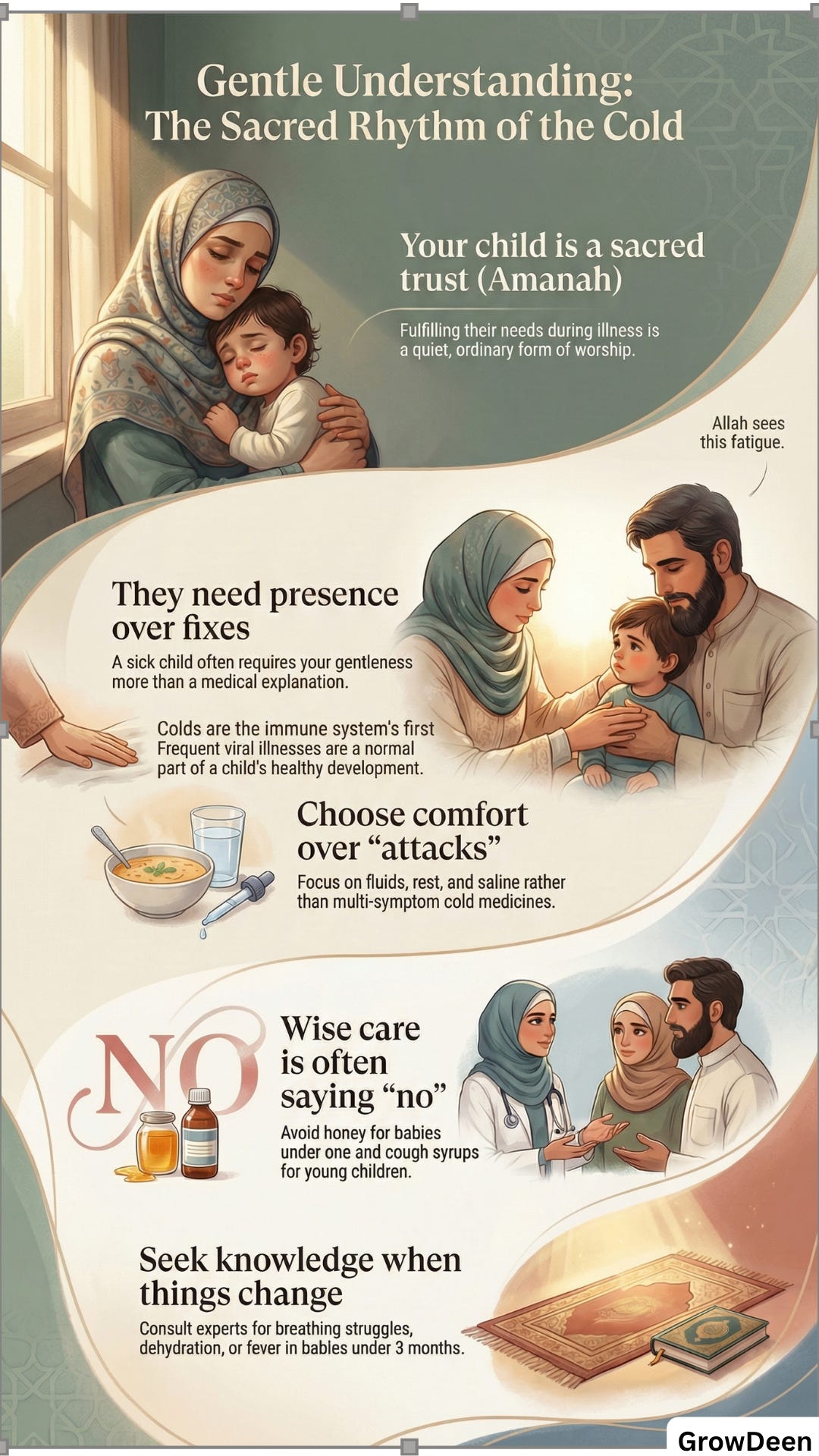
A child with a cold usually does not need a parent who can fix everything.
They need presence.
Allah says, “Indeed, Allah commands you to render trusts to whom they are due.” A child’s body is part of that trust. And the Prophet ﷺ said, “Each of you is a shepherd and each of you is responsible for his flock.” [9] [10]
That responsibility often looks very ordinary.
A cup offered again. A tissue. A held child. A decision to call the doctor because something is no longer sitting right in your heart.
And in all of this, gentleness matters. The Prophet ﷺ said, “Allah is gentle and loves gentleness in all matters.” [12]
A sick child often needs that gentleness more than any explanation.
Comfort matters more than trying everything
When a child has a cold, the main aim is not to attack the virus from every angle.
It is to keep the child comfortable while the illness runs its course.
Fluids matter because dehydration can creep in quietly. Food often matters less in the short term than drinking well. Paracetamol can help when fever or pain is making a child uncomfortable, and ibuprofen may also be used when it is appropriate for the child’s age and situation, following product directions or a clinician’s advice. Saline nose drops or spray can help a blocked nose feel less miserable, especially for younger children. [1] [2] [3] [5]
Honey at night may help ease cough in children aged 1 year and older. But it should never be given to a baby under 12 months because of the risk of infant botulism. [1] [4] [5]
And one small relief for many parents: dairy does not need to be cut out just because a child has a cold. The old idea that milk increases mucus is common, but the evidence does not support it. [8]
If this kind of gentle, practical, Islamically grounded support helps you breathe a little easier in hard parenting moments, subscribe for free so each new article and life gift reaches you right when you need it.
Some common cold remedies are better left alone
This part matters because tired parents are vulnerable to anything that promises quick relief.
Over the counter cough and cold medicines are not recommended for young children and can cause serious side effects. Oral decongestants and antihistamines offer little value for an ordinary cold and may cause problems like jitteriness, fast heartbeat, or poor sleep. Hot steam treatments are also not a good idea for children because of burn risk. Antibiotics should not be used for a simple cold. [1] [2] [3]
Aspirin should not be given to children or teenagers with viral illnesses unless a doctor has specifically prescribed it, because it has been strongly linked to Reye syndrome, which can be severe and even fatal. [1] [7]
Sometimes wise care is not about adding more.
It is about refusing the wrong thing.
The harder question is knowing when it is no longer just a cold
Most colds pass.
But sometimes the child in front of you begins telling a different story.
A baby under 3 months with a fever needs prompt medical assessment. Children of any age should be reviewed if they are struggling to breathe, breathing faster or harder than usual, becoming unusually sleepy, refusing fluids, vomiting repeatedly, looking dehydrated, or simply not improving as expected. If symptoms last beyond about 10 days without improvement, or improve and then get worse again, that deserves review too. Some colds are followed by ear infections, croup, bronchiolitis, or pneumonia, so worsening symptoms should not be brushed aside. [1] [2]
This is one of those moments where Islam does not ask a parent to pretend certainty.
Allah says, “Ask the people of knowledge if you do not know.” [11]
That verse fits illness more than people sometimes realize.
The home still matters, even when the cure is time
There are also small things that help reduce spread, even though no family avoids colds completely.
Handwashing matters. Covering coughs and sneezes matters. Not sharing cups or utensils helps too. [1] [2]
As for supplements and alternative remedies, vitamin C and echinacea have not shown reliable benefit for preventing or treating colds in children once illness begins. Probiotics may help reduce how often upper respiratory infections happen and may shorten illness somewhat, but the evidence is not strong enough to treat every product as dependable, and product quality varies. [5] [6]
That means the old, unglamorous things still matter most.
Rest.
Fluids.
Watching.
Mercy.
GIFTS FOR YOU, DEAR PARENT
If you’ve reached this part of the page, it tells me something meaningful about you.
You weren’t just skimming or passing time. You stayed because something here felt relevant to your real life.
Because you care.
Because you want to do things with more awareness.
Because you’re trying, even when it feels overwhelming.
That is not small.
So I didn’t want this article to remain just words on a page. I wanted it to gently step into your daily life in practical ways. That’s why we prepared these Life Gifts for you.
Not as extras.
Not as decorations.
But as simple tools to help you hold onto what mattered most in what you just read.
Here’s what you’ll find inside:
Gentle Understanding Card
A clear and simplified summary of the core concept from this article, so you can revisit the main idea anytime without rereading everything.
Heartfelt Dua Card
A carefully chosen dua connected to this stage of life, because we know that real strength and ease ultimately come from Allah’s help.
Gentle Actions Card
Practical examples to help you translate knowledge into action, so what you learned becomes part of your daily rhythm.
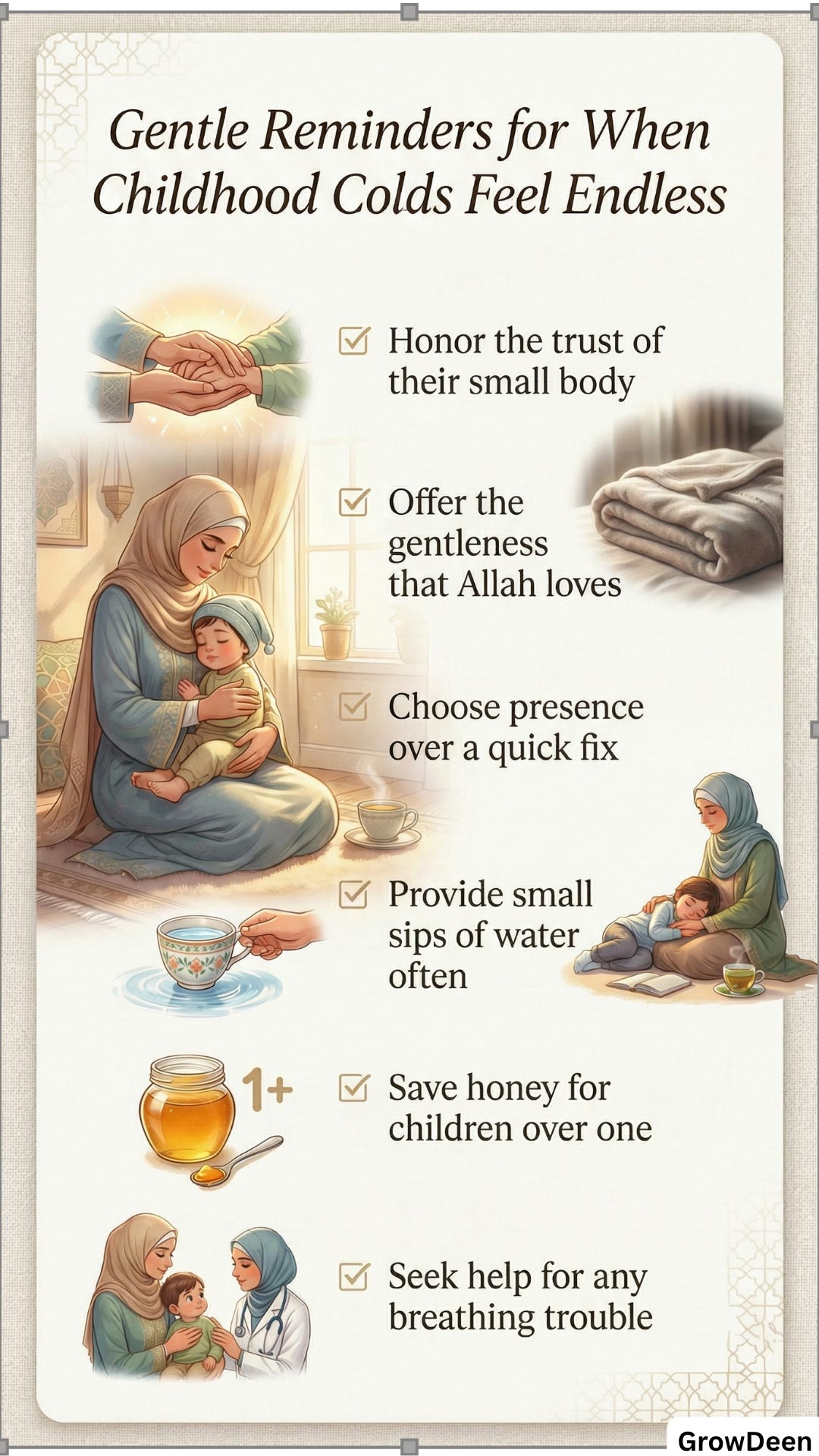
Gentle Reminders Card
Short, steady reminders drawn from the key points, designed to be printed or saved and placed somewhere you’ll see often.
These were designed slowly and thoughtfully, with time, care, and sincere dua. We created them because we genuinely want to walk alongside you, not just through one article, but through every stage of this lifelong journey.
If these gifts support you even in a small way, I would love for you to continue receiving them.
Subscribe so that each new Gift arrives directly in your inbox whenever we release the next stage. That way, you won’t miss the tools designed to support you right where you are.
May Allah place barakah in your effort, accept your intention, and make this path easier and more rewarding than it feels right now.
Please share it with a family/friend who may benefit from this knowledge.
What is one moment with your child that feels hardest lately, and what kind of support would make it feel lighter?
Subscribe for free to keep receiving gentle, research rooted, Islamically grounded support for the real moments of parenting.
What part of caring for a child with a cold feels heaviest for you right now?
References
[1] Centers for Disease Control and Prevention. Preventing and Managing Common Cold fact sheet.
[2] Friedman, J.N. Colds in children. Paediatrics & Child Health / Canadian Paediatric Society guidance archived in PubMed Central.
[3] U.S. Food and Drug Administration. Should You Give Kids Medicine for Coughs and Colds?
[4] Cochrane. Honey for acute cough in children.
[5] National Center for Complementary and Integrative Health. The Common Cold and Complementary Health Approaches: What the Science Says.
[6] Cochrane. Can probiotics prevent upper respiratory tract infections such as the common cold?
[7] Health Canada. Reye’s Syndrome.
[8] Mayo Clinic. Cold symptoms: Does drinking milk increase phlegm?
[9] Qur’an, Surah An-Nisa 4:58
[10] Sahih al-Bukhari, Hadith 7138; Sahih Muslim, Hadith 1829
[11] Qur’an, Surah An-Nahl 16:43
[12] Sahih Muslim, Hadith 2593
[13] Qur’an, Surah Al-Baqarah 2:286
[14] Jami` at-Tirmidhi, Hadith 1924